Share support and care effortlessly around the world
You are back online
Share support and care effortlessly around the world
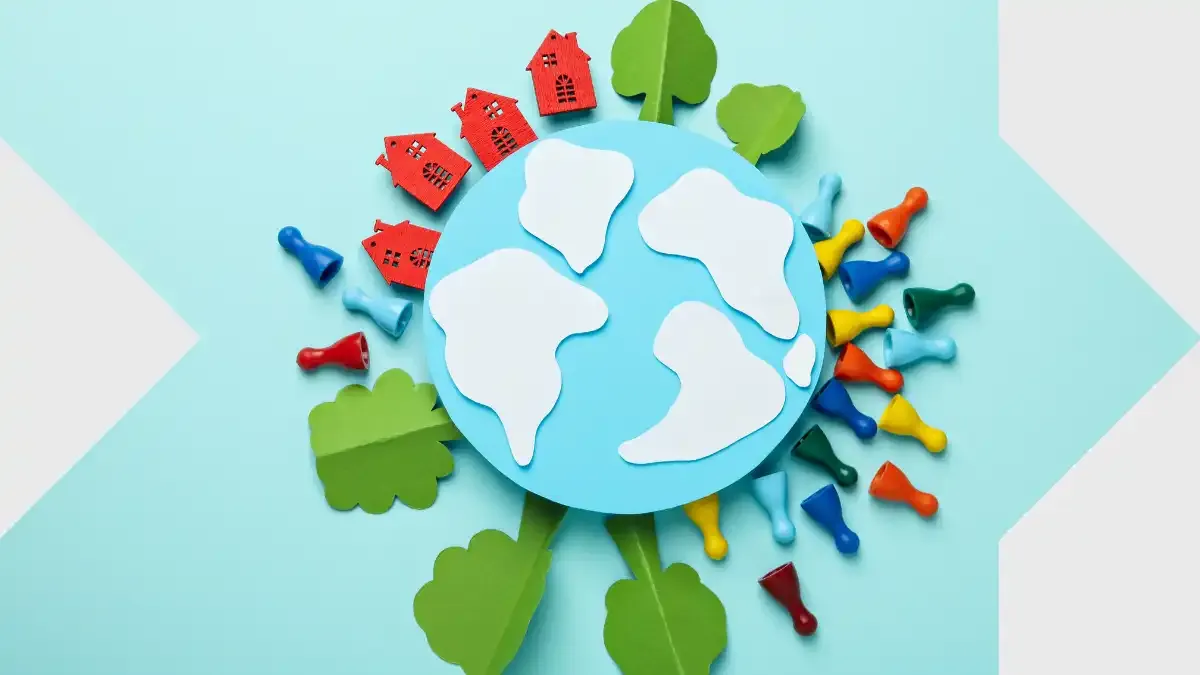
Every year on 11 July, World Population Day encourages people to look beyond population totals and consider the human experiences behind demographic change. In 2026, those experiences include young people trying to build the futures they want, families living across several countries, communities shaped by migration, and billions of people relying on digital communication to remain connected.
The global population was estimated at 8.2 billion in 2024. According to the United Nations, it is expected to continue growing for another five or six decades, reaching approximately 10.3 billion in the mid-2080s before gradually declining. Yet population change is not simply a question of whether the total number of people is increasing or decreasing. It also involves where people live, why they move, how families are formed, and whether individuals have the economic and social conditions needed to make meaningful choices about their lives.
This perspective is especially relevant in 2026. The theme selected by the United Nations Population Fund for this year’s observance focuses on realizing the hopes and aspirations of young people, both today and in the future. It invites governments, organizations, and communities to listen more closely to what younger generations want from relationships, family life, employment, housing, and society.
For millions of people, these aspirations must be pursued across borders. Migration can create new possibilities, but it can also separate parents from children, partners from one another, and extended families from the relatives who traditionally form part of their daily support networks. In this context, staying connected is not a minor convenience. It has become a central part of how families maintain trust, affection, care, and a sense of belonging.
Population trends are ultimately about people’s choices
Large population figures can seem distant from everyday life. However, demographic patterns are the combined result of personal decisions and social circumstances. Decisions about education, employment, migration, relationships, and parenthood all influence how societies develop.
The UNFPA Demographic Futures Survey 2026 gathered responses from more than 108,000 internet-connected adults aged 18 to 39 across 73 countries and territories. Its findings challenge the idea that younger generations have lost interest in relationships or family life. More than two-thirds of respondents indicated that they wanted to marry or live with a partner.
At the same time, aspirations do not always translate into reality. The UNFPA State of World Population 2025 report found that nearly one in five reproductive-age adults believed they might not be able to have the number of children they wanted. The barriers identified were often practical rather than personal. Financial pressure, job insecurity, housing costs, unequal caregiving responsibilities, health concerns, and uncertainty about the future can all limit people’s choices.
This is one reason World Population Day should not be reduced to conversations about birth rates or population size. An effective population policy must consider whether people have access to education, healthcare, stable employment, suitable housing, reproductive information, and supportive communities.
It must also recognize that families are increasingly diverse. A family may live in one household, across several cities, or in different countries. Grandparents may provide care from one region while parents work in another. Siblings may study abroad, and adult children may migrate while continuing to support relatives at home. These arrangements demonstrate how demographic change and family life are closely connected.
Migration is reshaping family networks
Migration is one of the most visible forces influencing modern population patterns. People move for employment, education, family reunification, security, environmental reasons, and the possibility of building a more stable future.
The United Nations estimated that there were 304 million international migrants in 2024. They represented approximately 3.7 percent of the global population, compared with 154 million international migrants in 1990. Although international migrants remain a relatively small percentage of the world’s population, their number has nearly doubled over that period.
These figures include many different experiences. Some people migrate temporarily, while others settle permanently. Some move alone before reuniting with their families. Others grow up in households connected to more than one culture, language, or country. Migration can be voluntary and carefully planned, but it can also result from conflict, persecution, disaster, or severe economic instability.
Forced displacement remains a particularly serious part of the global picture. UNHCR reported 41.6 million refugees worldwide at the end of 2025, alongside millions of asylum-seekers and people displaced within their own countries. Many of these individuals must rebuild their lives while maintaining relationships with family members whose locations and circumstances may remain uncertain.
However, migration should not be presented only as a story of separation or hardship. Migrants contribute knowledge, labour, entrepreneurship, cultural exchange, and new perspectives to the places where they live. They may also create wider family networks that connect communities across countries and generations.
The challenge is that family relationships must often be maintained without regular physical presence. Celebrations, decisions, illnesses, school milestones, and everyday conversations continue even when relatives cannot share the same room. Families therefore develop new routines of communication and care across distance.
What it means to be a transnational family
The term “transnational families” describes families whose members live in different countries but continue to maintain a shared sense of responsibility, identity, and emotional connection.
These families are not defined only by geographic separation. They are shaped by the continuous exchange of information, affection, advice, resources, and care. A parent living abroad may help with school expenses while also participating in daily decisions through video calls. An adult child may coordinate medical appointments for an older relative from another country. Brothers and sisters may use group chats to preserve family traditions, share news, and solve practical problems.
Technology has made these relationships more immediate. In previous generations, international communication often depended on letters, costly telephone calls, or occasional visits. Today, families can exchange messages, photos, voice notes, and videos throughout the day.
Nevertheless, digital communication does not eliminate every difficulty. Time-zone differences, unstable internet connections, the cost of mobile data, limited digital skills, and unequal access to suitable devices can all interrupt communication. Emotional challenges also remain. A video call can support closeness, but it cannot completely replace physical presence during important moments.
Regular communication is therefore most valuable when it becomes part of family life rather than being reserved for emergencies. Brief conversations, photographs of ordinary moments, birthday messages, and familiar jokes can provide continuity. They help family members feel involved in one another’s lives, even when distance changes how that involvement is expressed.
Connectivity has become part of everyday well-being
The importance of communication becomes clearer when viewed alongside current digital-access figures. The International Telecommunication Union estimated that 6 billion people were using the internet in 2025. This represented close to three-quarters of the world’s population.
At the same time, approximately 2.2 billion people remained offline. Access also continued to vary significantly according to income, location, and gender. Internet use was much higher in wealthier countries than in low-income countries, while urban residents were more likely to be connected than people living in rural communities.
Mobile technology plays a central role in reducing some of these gaps. According to GSMA’s Mobile Economy 2025 report, the world had approximately 5.8 billion unique mobile subscribers and 4.7 billion mobile internet subscribers in 2024.
For many people, a mobile phone is the main gateway to the internet. It may provide access to family communication, employment platforms, education, financial tools, healthcare information, government services, maps, news, and emergency assistance.
This is especially important for migrants and displaced people. Digital access can help someone search for work, contact relatives, translate information, obtain directions, store documents, or understand administrative procedures in an unfamiliar country. For refugees, meaningful connectivity can also support education, protection, healthcare access, and participation in host communities.
As a result, digital inclusion is not achieved simply by having network coverage. People also need appropriate devices, affordable data, reliable connections, relevant services, and the skills required to use them safely.
World Population Day provides an opportunity to recognize that communication access is now closely connected to social inclusion. When a person cannot maintain mobile service or access the internet, the consequences may extend far beyond a missed conversation.
Communication helps families provide care across borders
Family support is often discussed in financial terms, particularly when migration is involved. That economic dimension is significant. The World Bank projected that officially recorded remittance flows to low- and middle-income countries would reach $685 billion in 2024. Broader estimates placed total global remittance flows at approximately $905 billion.
These figures reflect the enormous contribution that migrants make to households and communities. However, family support is not limited to money transfers. It also includes emotional reassurance, advice, coordination, celebration, caregiving, and the ability to respond when something changes.
Communication allows people to provide these forms of support consistently. A parent can help a child prepare for an examination. A sibling can check whether a relative arrived home safely. Family members can discuss health concerns, organize travel, or make shared decisions about an older relative’s care.
These interactions can be especially important during periods of uncertainty. Migrants may experience loneliness, cultural adjustment, discrimination, or pressure to meet the expectations of relatives at home. Family members who remain in the country of origin may also face anxiety about distance and limited information.
Open and regular communication cannot remove every difficulty, but it can reduce uncertainty. It gives relatives a clearer understanding of one another’s realities and may prevent relationships from becoming defined only by financial requests or major problems.
Different generations connect in different ways
Cross-border communication is also influenced by age and digital experience. Younger family members may prefer messaging apps, video calls, social media, and shared online content. Older relatives may feel more comfortable with voice calls or simple text messages.
These differences can create misunderstandings. A young person may interpret frequent calls as intrusive, while an older relative may interpret brief messages as emotional distance. Families often need to find communication routines that respect different preferences.
Digital literacy is therefore part of maintaining family connections. Teaching a relative how to join a video call, open a digital gift, recognize suspicious messages, or manage mobile data can make communication more inclusive.
Safety is equally important. Families should be cautious about sharing identification documents, passwords, verification codes, financial information, or precise location details through unsecured channels. Migrants can be particularly vulnerable to scams involving false job opportunities, immigration procedures, emergency requests, or impersonation of relatives.
Strong family networks depend not only on frequent communication but also on trustworthy and responsible digital habits.
Mobile top-ups as practical support for communication
When people live in different countries, maintaining mobile access for a relative can be a direct and useful form of support. An international mobile top-up adds credit or a compatible mobile package to a recipient’s phone, depending on the services offered by the local operator.
This can help relatives continue making calls, sending messages, or using mobile data without waiting for a physical voucher. It may be useful for everyday communication, travel, study, work, or urgent situations.
At sendvalu, we view mobile top-ups as more than a technical transaction. They can help preserve the small, regular interactions that make family relationships feel present across distance.
A mobile top-up may enable a grandparent to receive a video call, help a student access educational information, or allow a family member to coordinate plans while travelling. Its value depends on the recipient’s circumstances, but the underlying purpose is often the same: keeping communication available when it matters.
Users should always verify the recipient’s country, mobile operator, and telephone number before confirming a top-up. They should also review the available amount or package carefully because mobile services and conditions vary by operator.
Through sendvalu, we aim to make this type of digital support straightforward, so families can focus on the person receiving it rather than the distance between them.
Digital gift cards offer another way to show care
Digital gift cards can also support relationships across borders. They provide a specific balance for a retailer, platform, or service and can often be delivered electronically.
Their purpose is not limited to special occasions. A digital gift card may help someone buy an everyday item, access entertainment, select a personal gift, or cover a specific need. Because the recipient generally chooses how to use the available balance within the relevant service, the gesture can combine practical support with personal choice.
For birthdays and family celebrations, a digital gift card can create a shared moment even when relatives cannot meet in person. Family members might arrange a video call while the recipient opens the gift, chooses an item, or explains how it will be used.
They can also support connection in less visible ways. Entertainment cards may give relatives access to shared films, music, or games. Retail gift cards can be used for personal purchases, while platform-specific options may suit study, work, or communication needs.
At sendvalu, we believe the most meaningful digital gifts are chosen with the recipient’s location, interests, and circumstances in mind. Before purchasing, users should confirm that the card is valid in the recipient’s country or account region and review any relevant redemption conditions.
Through our digital gift card service, we help people send a thoughtful gesture without relying on physical delivery across borders.
Staying connected should not become a source of pressure
Digital communication creates valuable opportunities, but constant availability can also create new expectations. Family members may feel that messages should be answered immediately or that distance no longer justifies missing an event.
Healthy communication requires empathy. Migrants may be balancing work schedules, time-zone differences, study, childcare, or the demands of adapting to a new environment. Relatives at home may also have routines and responsibilities that limit their availability.
Families can reduce tension by agreeing on realistic communication habits. A scheduled weekly call may be more sustainable than expecting daily conversations. Group chats can share updates efficiently, while private conversations remain important for sensitive matters.
It is also helpful to discuss the purpose of financial and digital support openly. Mobile top-ups, digital gift cards, and other forms of assistance should strengthen relationships rather than create obligations that one person cannot consistently meet.
The quality of communication matters more than the number of messages exchanged. Feeling listened to, respected, and included is often what allows a family relationship to remain strong over time.
A population story built around connection
World Population Day reminds us that demographic change is not only measured through charts, projections, or national averages. It is experienced through individual lives.
It can be seen in a young adult deciding whether secure housing is within reach, a parent working abroad while remaining involved in a child’s education, or a family adapting its traditions after relatives move to different countries. It is also visible in the billions of mobile devices that now carry conversations, photographs, advice, celebrations, and expressions of care across borders.
Migration will continue to influence communities and family structures. Digital access will become even more important as education, employment, healthcare, and public services move online. At the same time, inequalities in connectivity will remain a challenge that governments, businesses, and international organizations must address.
The goal should not be to assume that technology can replace physical presence. It should be to ensure that distance does not automatically become disconnection.
At sendvalu, we support this goal by helping people share mobile top-ups and digital gift cards with relatives and friends in other countries. These services provide practical ways to support communication and mark meaningful occasions across borders.
As we reflect on World Population Day in 2026, the most important questions are not only how many people live in the world or where population growth is occurring. We must also ask whether people can build the families they want, move safely when they need to, participate in connected societies, and remain close to the people who matter most.
Population trends may shape the future of the world, but relationships are what make that future human.
Sources:
United Nations Population Fund (UNFPA) – World Population Day 2026
United Nations Population Fund (UNFPA) – Lives, Choices and Futures - Demographic Futures Survey
United Nations Population Fund (UNFPA) – The real fertility crisis, The pursuit of reproductive agency in a changing world
United Nations – World Population Prospects 2024
United Nations – International Migration
Migration Data Portal – International Migrant Population (Stocks)
United Nations High Commissioner for Refugees (UNHCR) – Global Refugee and Displacement Data
United Nations High Commissioner for Refugees (UNHCR) – Digital Inclusion
International Telecommunication Union (ITU) – Facts and Figures 2025
Global System for Mobile Communications Association (GSMA) – The Mobile Economy 2025
Customer reviews
Why do they trust us? Read what our customers say about sendvalu.


Rated Best Over 5174 Reviews
