Share support and care effortlessly around the world
You are back online
Share support and care effortlessly around the world
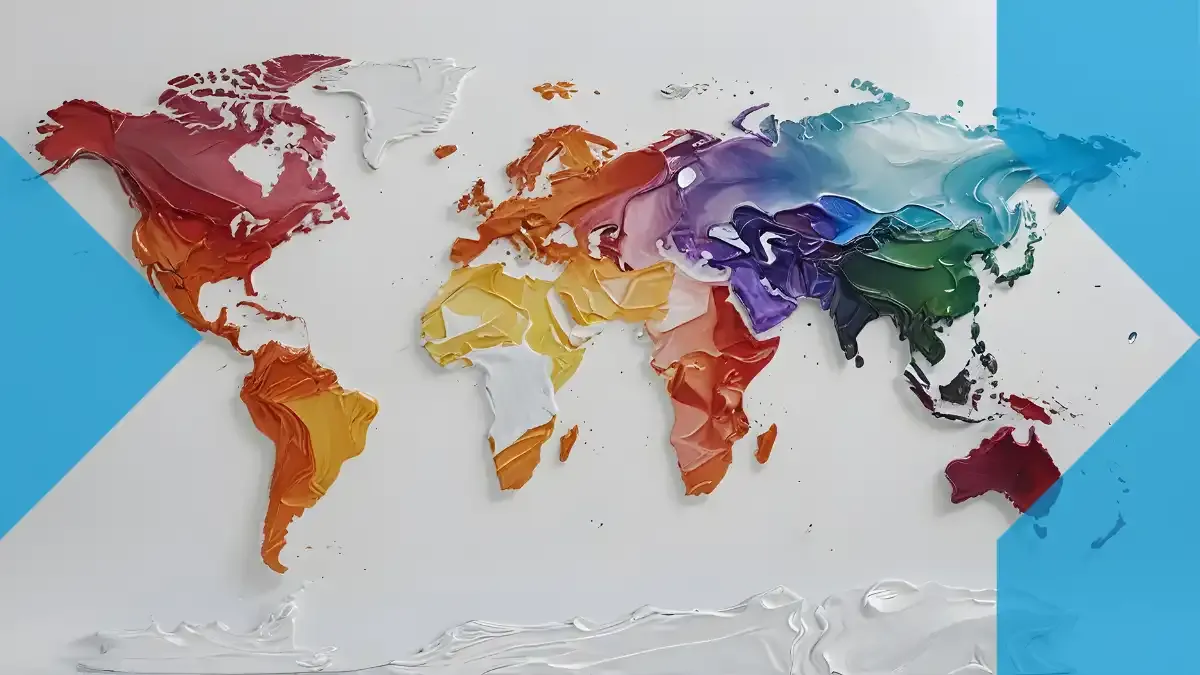
World Art Day (April 15) is a reminder that creativity is not only something we admire from a distance. It is also something we use to bridge distance. When families live across borders, time zones, and long stretches of ordinary life, art and cultural identity can become a shared thread that keeps emotions, memories, and belonging close enough to touch. At sendvalu, we think a lot about what “staying close” really means when you cannot be in the same room, and creativity is often one of the most human answers we see.
World Art Day is observed every year on April 15, and it has been formally recognized as a UNESCO observance since 2019. The day is framed around a simple idea: art matters in everyday society because it supports creativity and curiosity, invites dialogue, and reflects the diversity of how people live and express meaning. UNESCO also highlights arts education as part of the day’s purpose, and encourages communities to join in with activities like workshops, exhibitions, and public conversations that bring art into shared spaces.
Behind the calendar date is the belief that art is not only an individual talent, but also a social language. The official partner organization linked to the early history of World Art Day, the International Association of Art, describes the day as something built through artists and communities coming together, initially shaped through international collaboration and then broadened into a worldwide observance. Traditionally, April 15 is also associated with the birthday of Leonardo da Vinci, often referenced as a symbol of art’s relationship with human dignity, curiosity, and creative freedom.
That matters for families too, because the same qualities that make art public also make it intimate. A song, a pattern, a lullaby, a design style, a favorite color palette, or a holiday craft can carry “this is who we are” across a phone screen, across an ocean, across a generation. Peacefully, art and cultural identity become the portable parts of home.
Distance changes families in obvious ways, like fewer shared meals and missed birthdays. It also changes families in subtle ways: how a child learns a heritage language, how grandparents pass down stories, how traditions evolve when different countries and schedules shape the calendar. Over time, identity can become something you “keep in your head,” rather than something you practice together.
This is one reason UNESCO’s framing of “intangible cultural heritage” is so helpful for understanding family connection. The Convention’s definition explicitly links living practices, expressions, and skills to a sense of identity and continuity, and it emphasizes that these practices are transmitted across generations while being continually recreated in response to life circumstances. In other words, culture is not a museum object. It is a living routine, a shared set of skills, and a set of meanings that need opportunities to be practiced, reinterpreted, and handed forward.
Family research often arrives at a similar conclusion from another angle. Reviews of family routines and rituals distinguish between repeated activities that organize daily life and symbolic rituals that carry shared meaning, and they connect these patterns to family functioning and well-being. More recent theorizing highlights security and identity as core “building blocks” in how rituals become meaningful and protective, especially when life is changing.
When you combine these ideas, you get a practical insight: if distance removes the default moments of cultural transmission, families often have to build new ones on purpose. This is where art and cultural identity become especially powerful, because creativity can turn meaning into something you can share across distance in a photo, a voice note, a short video, a small package, or a simple weekly ritual.
It is easy to talk about art in poetic terms. It is also supported by a growing body of research that connects arts participation to social connectedness, belonging, and well-being.
A qualitative study of arts engagement in the United Kingdom during the first year of the COVID-19 pandemic found that people described arts and cultural activities as supporting social connection through pathways like sharing, belonging, and collective understanding. An integrative review in Frontiers in Public Health synthesized evidence across multiple countries and suggested that community-based arts participation can support social cohesion, with particular emphasis on co-creation and cultural sharing as mechanisms that help build relationships and belonging. Even when the research focus is community-level, the logic translates naturally to families: when you make something together, you are also making “we.”
Music, specifically, has a special role because it is both highly emotional and easily shareable. A cross-cultural study on musical “family rituals” examined data from Kenya, the Philippines, New Zealand, and Germany, and it found that music listening in families was associated with family cohesion across contexts, with links to emotional well-being showing cultural variation. The point is not that one playlist “solves” distance. The point is that shared music can function as a ritual: predictable, meaningful, and socially binding.
Group singing research offers another clue about why music feels like closeness. Experimental and review work has found that singing together can shift mood and feelings of connection compared with non-musical group activities, and biological measures like hormones related to stress and affiliation have been studied as part of this picture. A news summary from the University of Oxford describing a longitudinal study of adult education classes reported that new singing groups bonded faster than groups formed around crafts or creative writing, highlighting singing’s “ice-breaker” role in social bonding.
Memory is the other half of the story. Music can cue autobiographical memories with relatively little effort, and this is one reason it is studied in both social and clinical contexts. Research on music-evoked nostalgia also ties directly to family connection: a narrative review argues that music-evoked nostalgia can strengthen social connectedness, self-continuity, and meaning, which are exactly the psychological ingredients families reach for when distance threatens to thin the sense of “us.” Related work on tradition transfer suggests that nostalgia can motivate parents to pass on traditions, with relationship closeness identified as a key mechanism.
Put simply, the science does not say “art is magic.” It says something more useful: shared creative activities have recognizable pathways to bonding, belonging, and continuity, and those pathways matter when geography makes closeness harder. That is why art and cultural identity are not sentimental extras. They are practical tools for staying emotionally nearby.
If distance is a long-term condition, the goal is not a single touching moment. The goal is a repeatable rhythm. In our experience at sendvalu, the families who feel closest across distance often have small, consistent practices that carry meaning, even when time is limited.
One helpful way to think about creative connection is “low pressure, high symbolism.” A ritual does not have to be elaborate to matter. Family-ritual research emphasizes that meaning, predictability, and shared participation are often the core ingredients, not scale.
Here are realistic, globally adaptable ways families use creativity to stay close, without turning it into homework:
A Shared “Family Museum”
Pick a simple theme each month: “Our kitchens,” “Songs that raised us,” “Patterns we love,” “First days of school,” “Places we miss.” Each person contributes one photo, sketch, short voice note, or small design. Over time, this becomes a living archive, and it mirrors what cultural heritage frameworks emphasize: transmission plus reinvention.
Co-Making, Not Just Showing
Video calls often become conversation-only, which can feel flat. Shared making changes to the energy. Families can draw portraits of one another, do simple crafts in parallel, or make a small object together while chatting. Practical guides for video-call creativity highlight that drawing games and simple art prompts can work well at a distance, especially with children.
A Family Playlist with a Story Behind It
Instead of sending a list of songs, send one song at a time with a one-sentence story: “This was playing when we cooked on Sundays,” or “This reminds me of your uncle’s laugh.” The music becomes a memory cue, and the story becomes an identity cue. Research on music-evoked nostalgia and autobiographical memory supports the idea that music is a powerful trigger for meaningful recollection and social connectedness.
Crafts That Carry Culture
Traditional craftsmanship is explicitly included in UNESCO’s definitions of living heritage. That can mean textile patterns, beadwork, paper crafts, carving, calligraphy, or any local craft tradition. The key is not perfection. The key is the shared process and the language around it: the names of materials, the stories about who taught whom, the “we do it this way” details that children remember.
A “One Page, One Week” Family Design Challenge
Set a weekly 10-minute prompt: “Draw the place you feel most calm,” “Design a family flag,” “Sketch a dish from home,” or “Create a postcard to Future Us.” Share results in a group chat. Over time, the collection becomes a visible map of belonging. Studies linking arts engagement to connectedness often highlight sharing and commonality as key pathways.
What matters most is repetition. A ritual becomes identity not through a single grand moment, but through return. And when families return to creativity together, art and cultural identity become a kind of emotional infrastructure: something that holds people up when they cannot hold each other.
Because this topic is global, it deserves one important note: cultural expression is not a costume, and “sharing culture” is not the same thing as turning it into content.
UNESCO’s language around living heritage emphasizes mutual respect and the idea that practices are continuously recreated by communities in response to history and environment. That is a useful guide for families too. Many families are mixed across cultures, religions, and languages. Some children grow up with multiple “homes.” Some traditions shift because ingredients, materials, and social contexts change. That does not make the tradition less real. It makes it alive.
Respectful creativity across distance often looks like this:
At sendvalu, we keep coming back to a simple idea: closeness is not only about the frequency of contact. It is about the quality of meaning that passes back and forth. Creativity is one of the safest containers for that meaning because it leaves room for feeling, not just information.
World Art Day is sometimes presented as a celebration of artists in galleries, studios, and public life. But it can also be something quiet: a family sketchbook passed between homes, a song sent at the right moment, a child learning the shapes and colors that feel like “ours,” even when “ours” is spread across continents.
If you are far from the people you love, start small. One photo. One verse. One shared recipe redesign. One bedtime story recorded in a familiar voice. These are creative acts, and they are also relational acts. Over time, they become proof that distance did not erase tenderness.
The deeper message is that art and cultural identity help families stay close because they offer three things distance cannot: a language for feelings, a structure for rituals, and a memory home.
For us at sendvalu, that is what connection looks like in real life: not only being able to reach one another, but being able to recognize one another, again and again, through the things you make and share. Across many countries and communities, we help people stay close in practical ways, so that support, care, and connection can continue to travel wherever family is. You can explore all available destinations on our all countries page.
Sources:
UNESCO – World Art Day
UNESCO – Convention for the Safeguarding of the Intangible Cultural Heritage
Frontiers in Public Health – Relationships Between Arts Participation, Social Cohesion, and Well-Being
Frontiers in Psychology – Music Listening in Families and Peer Groups
ScienceDirect – How Arts Engagement Supported Social Connectedness During the First Year of the COVID-19 Pandemic
American Psychological Association – A Review of 50 Years of Research on Naturally Occurring Family Routines and Rituals
Wiley Online Library – Theorizing Family Rituals: A Family Systems Model
SAGE Journals – The Psychological Benefits of Music-Evoked Nostalgia
Kinzoo – 10 Fun Activities for Video Calls with Kids
Customer reviews
Why do they trust us? Read what our customers say about sendvalu.


Rated Best Over 5174 Reviews
