Share support and care effortlessly around the world
You are back online
Share support and care effortlessly around the world
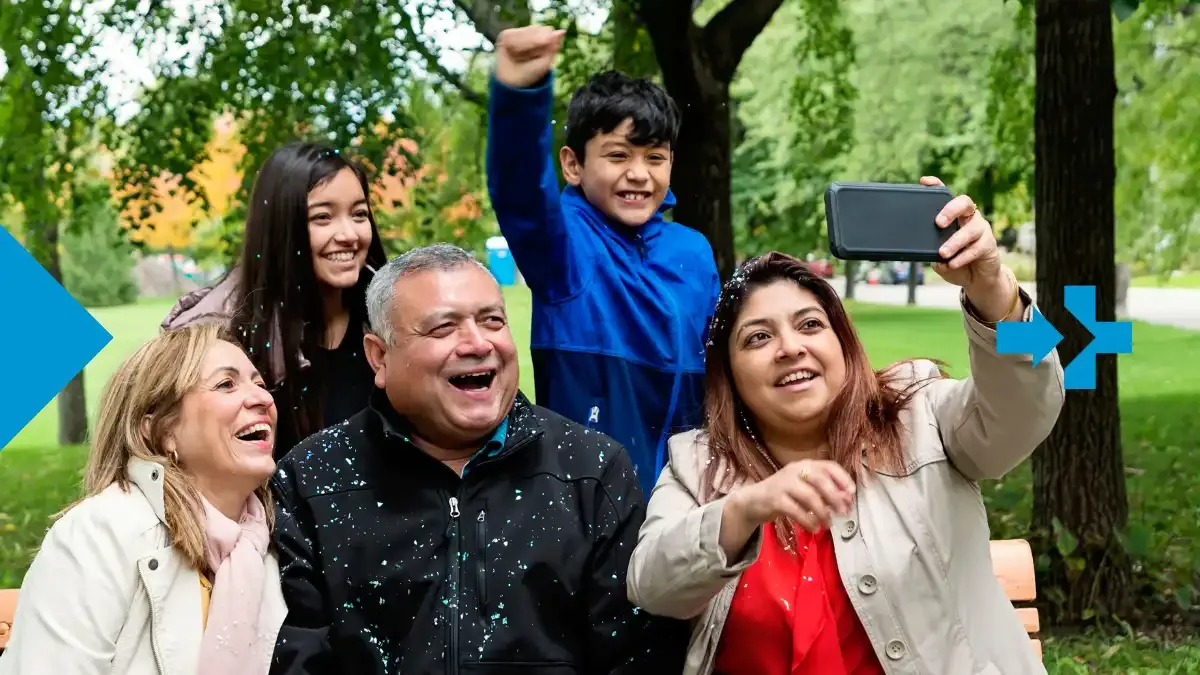
2025 was a year that tested the resilience and unity of families across Latin America. Despite economic uncertainties and the lingering effects of global challenges, Latin American families managed to stay closely connected, often across great distances. Millions relied on support from loved ones abroad, as remittances (money sent home by migrants) continued to grow and serve as lifelines for households. Cultural traditions flourished, with families finding creative ways to celebrate together even when apart.
Strong community ties, both locally and within diaspora communities, provided comfort and solidarity during tough times. From Colombia to the Dominican Republic, Brazil to Peru, Chile to Guatemala, families found that distance was no barrier to love, support, and unity. This article reflects on how financial support, cultural traditions, and community bonds kept Latin American families united in 2025, and how cross-border help strengthened their resilience during the year’s key challenges.
One of the most tangible ways families stayed united in 2025 was through financial support from abroad. Remittances, the money immigrants send back to their home countries, have long been a pillar of household stability in Latin America. In 2025, they reached new heights in many countries, proving crucial in helping families overcome economic challenges. Remittances are truly a lifeline: they fund basic needs like food, housing, healthcare, and education for millions of Latin American households.
In fact, these flows significantly reduce poverty and provide a direct safety net at the household level, allowing families to meet immediate necessities and even invest in long-term goals like schooling or home improvements. The Inter-American Development Bank noted that remittances to Latin America were expected to rise for the 16th consecutive year in 2025, underscoring their resilience and importance despite global uncertainty. The possibility of sending money home is often one of the main reasons people migrate in the first place, and this year showed why: that support can be a lifeline in hard times.
Resilience through remittances was a recurring theme across the region. When local economies faltered, or prices spiked, loved ones abroad stepped up their support. For example, many migrants increased the amount they sent home during periods of high inflation, ensuring their families could cope with rising living costs. Even as inflation cooled later on, migrants continued the habit of sending regular help, resulting in sustained high remittance volumes to their families. This pattern was seen in multiple countries. Colombian families, for instance, benefited as remittances to Colombia were still growing about 5% year-over-year by late 2025. In Guatemala, remittance inflows surged nearly 20% in 2025, between January and October, Guatemalans abroad sent almost 20% more money than the previous year, reaching record sums. Such increases provided a critical buffer for Guatemalan communities, especially in rural areas where jobs are scarce, and prices for essentials had climbed. Dominican Republic households similarly saw about a 12% uptick in money received (as of September 2025), reflecting how diaspora support grew to meet local needs. Even countries with more moderate growth, like Peru and Chile, continued to rely on steady remittances from their citizens abroad to bolster family incomes and local spending.
It wasn’t just routine needs that remittances addressed; they also proved indispensable during crises and unexpected challenges. When hardships struck, Latin American migrants often sent extra funds or goods home to help their families recover. Research has shown that remittances tend to spike after natural disasters or emergencies, as migrants immediately respond to support their loved ones. In one study, analysts found that remittance flows increased significantly for several months following major disasters in countries like the Dominican Republic and Honduras. Each dollar of estimated hurricane damage was partially offset by additional cents in remittances sent by concerned relatives. This was evident in 2025 as well. For example, when a series of strong earthquakes struck portions of Guatemala mid-year, the Guatemalan diaspora in the United States and elsewhere mobilized to send money home quickly, helping families rebuild homes and purchase emergency supplies (a pattern consistent with past disaster responses). In these ways, cross-border help strengthened resilience: it acted as an informal insurance mechanism and relief fund, cushioning families from the worst of economic downturns or calamities.
Crucially, the impact of these financial connections extended beyond day-to-day survival. Remittances enabled families to plan for a better future. Parents could afford to keep children in school and pay tuition; entrepreneurs invested in small businesses; households saved for medical care or improved housing. In rural communities from Guatemala to Colombia, migrant dollars funded tractors, wells, and solar panels, fostering development from the grassroots. This steady infusion of “love money” from abroad not only kept families united in purpose but also lifted entire communities. It is no exaggeration to say that remittances in 2025 were “more than transactions, they were lifelines that strengthen households, communities, and entire economies.” By the end of the year, Latin American nations collectively received hundreds of billions in remittances, far outpacing foreign aid. These flows represented votes of confidence by migrants in their families’ futures. They also symbolized emotional bonds; each transfer a concrete expression of care, as if saying, “I’m here for you, even if I’m far away.”
Beyond money, cultural traditions and shared celebrations played a powerful role in keeping Latin American families connected in 2025. In a region rich with festivals, holidays, and rituals, families found ways to include loved ones abroad in the joy, and vice versa, diaspora communities celebrated their heritage to feel closer to home. This year saw vibrant observances of everything from Carnival to Independence Days, where the spirit of family and tradition bridged any physical divide.
Take Carnival season 2025, for example. Countries like Brazil, Colombia, the Dominican Republic, and Peru hosted some of the world’s most spectacular Carnival celebrations in February and March. These multi-day festivities, known for colorful parades, music, and dance, are times when families and communities come together in merriment. But Carnival is also expensive for participants, from buying costumes to preparing feasts. Here, support from abroad often made a difference. Many Latin American expats sent money to their relatives specifically to help them enjoy Carnival. Remittances helped pay for a daughter’s Carnival dress in Rio, a son’s bus ticket to Barranquilla, or a family reunion in Santo Domingo. These financial lifelines made the magic of Carnival possible, allowing families back home to celebrate “without limitations, keeping their traditions strong across generations and borders.”
Imagine a grandmother in Brazil able to host the traditional Carnival block party because her daughter in Boston sent a timely transfer, or a young man in rural Dominican Republic finally affording a trip to the capital’s parade thanks to his brother abroad. In each case, the culture was celebrated, and the family bond strengthened, distance be damned.
Other cultural and religious holidays saw similar cross-border togetherness. During Holy Week and Easter, relatives abroad contributed to ceremonies like Guatemala’s famous Semana Santa processions or Colombia’s family gatherings, ensuring that elaborate meals and community events could proceed. On Mother’s Day and Father’s Day, migrants sent gifts, cards, and money home, often using digital gift cards or online stores to deliver a token of love from afar. The year’s end brought Christmas and New Year’s festivities, traditionally key family occasions in Latin America. In 2025, many families had a member or two abroad, but through video calls and special deliveries, they still “gathered.” For instance, a Colombian family might set a laptop at the dinner table so that an aunt in Spain could join Nochebuena virtually, while the aunt arranged a surprise gift delivery via an app for the kids at home. Technology became entwined with tradition, helping preserve that warm feeling of family despite separations.
Perhaps the most poignant example of cultural connection was seen during the various Independence Day celebrations and heritage observances in the second half of 2025. In September, countries like Brazil, Costa Rica, Guatemala, Honduras, Chile, and Mexico mark their national days. Diaspora communities across the globe took part enthusiastically. The Brazilian diaspora, for instance, celebrated Brazil’s Independence Day (Sete de Setembro) in cities from New York to Tokyo. They organized street festivals featuring samba and Brazilian food, turning foreign city squares into mini-Carnavals for the day. These events not only allowed Brazilians abroad to feel at home, but they also often involved sending videos, photos, and even donations back to family in Brazil to show them the pride and joy being shared in their honor. The same happened for Central America’s Independence Day on September 15. Salvadoran, Guatemalan, and Honduran communities abroad ran torchlighting ceremonies and parades. In one beautiful tradition, a ceremonial “Flame of Independence” relay runs through all five Central American countries; in 2025, many migrants watched it via livestream and sent messages of unity. As one observer noted, such diaspora celebrations “allow those abroad to stay connected with their heritage while sharing it with the world. By the end of the day, whether in São Paulo or a diaspora hub like Newark, families proudly echo their independence sentiments: celebrating freedom with music, dance, and unwavering patriotism.”
Crucially, these cultural bonds were not one-way (just diaspora feeling connected to home); they also reinforced home-family unity with those abroad. Families in Latin America know their loved ones overseas still cherish the same traditions. So, they often dedicate parts of celebrations to include them, a shout-out during a toast, a WhatsApp video of the neighborhood fiesta, a mass intention prayed for those far away. Knowing that “the values of familia, tradición, and solidaridad are upheld when those abroad can contribute to the celebrations at home” gave everyone a sense of comfort. Each shared holiday, each synchronized toast across time zones, was proof that “culture and patriotism have no borders.” Throughout 2025, Latin American families proved that even if a son was working in New York or a mother was temporarily in Madrid, they remained integral to the family’s cultural life back home. The heritage and customs were a bridge across borders, a source of pride and unity that distance could not dilute.
Latin American families in 2025 also leaned on their community ties and solidarity networks to stay united. “Community” here meant both the immediate local community, neighbors, friends, local organizations, and the extended community of compatriots abroad (the diaspora). By fostering a spirit of mutual help and belonging, these networks ensured that no family felt truly alone, even amidst adversity.
On the home front, communities came together to support one another through challenges. For example, in parts of Peru hit by an economic slowdown, local community kitchens (comedores populares) sprang into action with donations from former residents now overseas. In a small town in Guatemala, when heavy rains caused flooding, neighbors took in those displaced, and diaspora members from that town pooled money to fund repairs to the local school. These acts highlight a defining trait of Latin American culture: solidaridad (solidarity). People banded together, whether by blood or by shared hometown, to lift each other. In 2025, numerous grassroots fundraisers illustrated this: a Chilean community in Santiago raising money to send medicine to an ailing relative in the US, or a Mexican village receiving a new water pump financed by their migrants in the States. Such stories were common and showed how community care crosses borders.
Diaspora communities themselves became like second families for many. Latin Americans living abroad often formed tight-knit groups based on their country or even their hometown of origin. These groups provided social support (celebrating birthdays, mourning losses, preserving language and food) and frequently organized aid for those back home. In 2025, Colombian expatriates in Miami raised funds to help victims of landslides in Colombia, Dominican-Americans in New York sent thousands of care packages to the Dominican Republic after summer storms, and Brazilian communities in Japan held charity drives to sponsor school supplies for low-income children in Brazil. This phenomenon is sometimes called “hometown associations”; migrants self-organize to give back to their hometowns. It was alive and well in 2025, strengthening bonds across borders. Through these efforts, families stayed united not just at the individual level, but as communities with shared destinies.
Technology and social media also played a big role in maintaining community connections. WhatsApp groups, Facebook pages, and Zoom calls became virtual town squares for dispersed families. A family group chat could include relatives in Lima, Los Angeles, and London, all joking and sharing news daily. Community Facebook groups for, say, Venezuelans in Chile or Guatemalans in Los Angeles allowed diaspora members to help newcomers integrate while also collectively organizing help for folks back home. In this way, the Latin American “global village” felt smaller; distance was mitigated by constant communication and the ease of sending resources quickly when needed.
The result of these strong community ties was a remarkable level of resilience. Latin America faced its share of challenges in 2025, including economic headwinds to climate-related events, but families were not facing them alone. One could see this resilience in anecdotes like a Peruvian father proudly stating that even when he lost his job, his cousin in the U.S. and his neighbors next door ensured his children never missed a meal. Or a Dominican student who could afford to continue university after her mother’s income fell, because her extended family (both in-country and abroad) collectively chipped in for her tuition. These scenarios underline a powerful truth: unity is strength. By staying connected and helping one another, Latin American families turned challenges into mere hurdles rather than insurmountable walls.
It’s worth noting that such solidarity isn’t new; it’s culturally ingrained. Concepts like “compadrazgo” (the broader godparent kin network) and “minga” (community work parties) have long connected Latin American families and neighbors in mutual aid. What was notable in 2025 was how these traditional forms of solidarity were augmented by modern tools and global diaspora links. Families essentially operated without borders; a supportive friend or relative might be next door or 5,000 miles away, but either way, they were there for you. The diaspora ensured that culture and compassion have no borders. Every time someone sent money home or organized a cultural event abroad or simply made a phone call to check on a loved one, they were reinforcing the social fabric that kept everyone afloat.
Throughout all these stories of financial support, cultural celebration, and community solidarity, one constant enabling factor was technology, especially fintech and digital platforms that facilitate cross-border connections. In 2025, services like sendvalu proved invaluable in helping families deliver what we call “value beyond borders.” Our multi-service platform (available via website and app) allowed people to send not only money, but also mobile phone top-ups and digital gift cards across countries. These tools meant that expressing love and care at a distance was easier than ever before.
For instance, a daughter working abroad could use sendvalu to instantly recharge her mother’s prepaid mobile phone back home, so they could stay in touch with calls and messages. A son who couldn’t be home for the holidays could send his family a digital gift card for a supermarket or store in their country, allowing them to buy presents or a special meal, a gesture of love in his absence. And of course, the core service was sending money quickly and affordably to over 140 countries, many in Latin America. Platforms like sendvalu were designed with diaspora communities in mind, making it effortless to “share care” with loved ones globally. Whether one needed to remit money for a celebration or just to cover everyday expenses, sendvalu ensured the process was fast, secure, and affordable.
Speed was a particularly crucial feature. In the past, sending money or support could take days or require physically visiting an agent. In 2025, sendvalu and similar digital services delivered funds often within minutes. That speed made all the difference in scenarios like last-minute needs during a festivity, say a family in Chile realizing they needed more funds to host a community Independence Day picnic, and their relative abroad sending money that arrived instantly to save the day. Every transfer could be tracked online, giving both sender and receiver peace of mind that the support reached safely. The reliability was high too: sendvalu operates under strict security protocols and offers 24/7 customer support, meaning users trusted that their help would arrive on time.
One remarkable aspect of sendvalu’s platform is its flexibility in delivery. Recognizing that families have different needs, it offers multiple payout options: direct deposits to bank accounts (great for relatives in cities with banking access), cash pickup at over 215,000 locations worldwide (important for those in areas where cash is king), mobile wallet credits, and even home delivery of cash in some regions. For example, an elderly grandmother in a remote Guatemalan village who can’t travel easily could receive money literally delivered to her door thanks to such services, turning a digital transfer into tangible help in her hands. This kind of reach ensured that support truly penetrated to the last mile, including rural communities that might otherwise be left out of the digital finance revolution.
But sendvalu goes beyond money transfers. The inclusion of mobile top-ups and gift cards as sendable items proved that sometimes it’s the small gestures that carry huge emotional value. A quick phone top-up could mean a long, heartfelt phone call between a mother and son across borders, essentially enabling a conversation that felt like a “verbal hug.” A gift card sent to, say, a popular department store in Colombia or a pharmacy in the Dominican Republic might allow a family to get exactly what they need or want, the freedom of choice, plus the feeling of receiving a present from afar. These services made support personal and practical, capturing the idea that caring for someone can take many forms. As sendvalu highlighted during the International Hugging Day campaign in January 2025, “Even if a physical hug isn’t possible, sendvalu makes it easier to express your care and affection in other meaningful ways. Every gesture of kindness, whether through a hug or thoughtful support, is a gift, a moment of warmth, love, and unity that brings us closer together.” In essence, the platform aimed to translate the affection behind each remittance into various channels of giving.
Affordability was another major factor. High fees have long been a thorn in the side of remitters, cutting into the value received. That is why we offer lower fees and competitive exchange rates, ensuring more of the sender’s money reaches their family. In fact, digital remittances can be significantly economical; one report noted online services are about 18% less costly than traditional cash transfers in Latin America. With sendvalu, users knew exactly how much their loved ones would get, thanks to upfront pricing and transparency. The first transfer was often fee-free for new users, giving them a risk-free trial of the service. By removing barriers of cost and complexity, sendvalu effectively democratized cross-border support, so that even migrant workers earning modest wages could afford to send small but meaningful amounts home regularly.
All these features reinforced a larger point: technology and innovative services helped keep families close-knit globally. The tagline “Value Beyond Borders” became truly meaningful in 2025; it wasn’t just about monetary value, but the value of love, security, and togetherness that these cross-border services delivered. When a user in the diaspora opened the sendvalu app, they weren’t just making a financial transaction; they were sending a message: “I remember you. I care for you. I want to share what I have so you can be okay.” The platform was simply the bridge for that human connection. In the words of sendvalu’s own reflection on heritage celebrations, “it’s heartwarming to know that technology and services like sendvalu enable the global Latino community to remain close-knit. The values of familia, tradición, and solidaridad are upheld when those abroad can contribute to the celebrations at home.” No matter where in the world 2025 found Latin American family members, separated by countries or even continents, they had tools at their disposal to reach across the divide and touch the lives of those they love.
As we look back on 2025, it’s clear that Latin American families wrote a powerful story of connection and resilience. In a year that brought its share of economic twists and environmental turns, families drew strength from one another, even if they were under the same roof or oceans apart. Financial support flowed steadily from abroad, acting as both lifeblood for daily sustenance and a cushion in emergencies. Cultural traditions were celebrated with gusto and inclusivity, proving that neither distance nor time apart could dilute the shared heritage that binds families together. Community ties, locally and globally, ensured that help was at hand when needed and that joys were shared widely. From Colombian neighborhoods buoyed by remittances to Dominican festivals enriched by diaspora contributions; from Brazilian and Chilean independence fiestas echoing across hemispheres to Guatemalan villages rebuilt with help from sons and daughters abroad, the examples are endless, but the common thread is unmistakable: family and community love transcend borders.
The role of our platform is instrumental in this narrative. By delivering “Value Beyond Borders,” we enable countless heartfelt gestures: the urgent medical bill paid in Peru by a brother in Italy; the surprise birthday gift delivered in Guatemala from a sister in Canada; the Christmas dinner in El Salvador made possible by a remittance from an uncle in the States. In doing so, it highlighted a hopeful truth about our modern age, that distances are no longer measured only in miles, but in the speed of a mobile transfer or the ping of a video call. The bonds of kinship and friendship have stretched across the globe, and tools exist to keep them strong.
Ultimately, 2025 reminded us that “distance doesn’t have to mean disconnection.” Latin American families, perhaps like no others, understand that the heart of the family is not diminished by separation; if anything, it inspires creative new ways to support and enrich each other’s lives. With unwavering solidarity, a flair for celebration, and the help of technology, these families turned a potentially challenging year into “A Year of Connection.” They demonstrated that love and solidarity are the greatest currencies, yielding value that truly goes beyond borders. As we celebrate these stories, we are inspired to carry that spirit forward: knowing that no matter what the next year brings, the ties that bind family will remain strong, nourished by care that knows no distance.
If you want to discover where you can stay connected with loved ones across Latin America and beyond, you can explore our full list of supported countries.
As we reach the end of the year, we wish you and your loved ones a season filled with peace, warmth, and meaningful moments. May the holidays bring comfort and connection, and may 2026 open with hope, strength, and new opportunities for you and your family. From our sendvalu community to yours, we wish you all the very best as the year comes to a close and a new one begins.
Sources:
Inter-American Development Bank – Remittances to Latin America and the Caribbean in 2025: Adaptations in a Context of Uncertainty
FacilitaPay Blog – Remittances and their significance in LatAm economies
BBVA Research – Remittances Continue to Grow in LAC, but Not in Mexico
ODI – HPG Report – Remittances during crises: implications for humanitarian response
sendvalu Blog – Carnival in Latin America: A Celebration of Culture, Joy, and Tradition
sendvalu Blog – Hispanic Heritage Month and Latin Independence Celebrations
sendvalu Blog – International Hugging Day: Spreading Warmth and Connection on January 21
sendvalu Blog – Mexico’s Record Remittances: The Rise of Digital Transfers
Customer reviews
Why do they trust us? Read what our customers say about sendvalu.


Rated Best Over 5174 Reviews
