Share support and care effortlessly around the world
You are back online
Share support and care effortlessly around the world
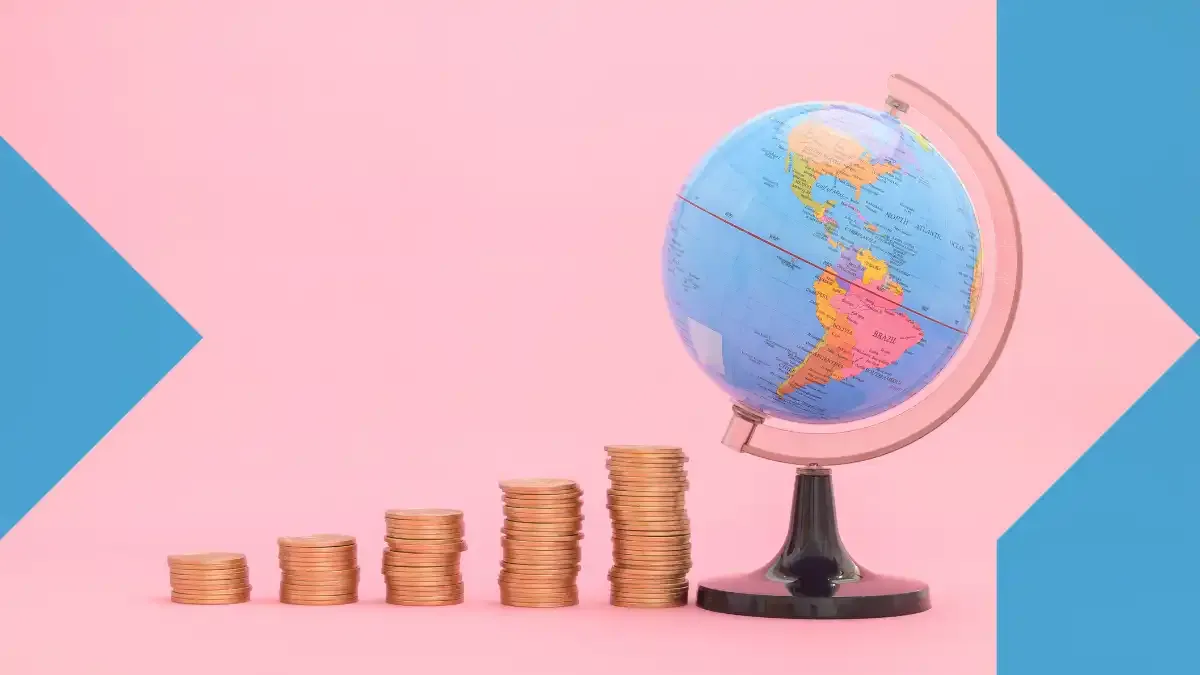
For many households, family remittances are not only about money moving from one country to another. They are about a mother being able to buy groceries, a student staying connected to school, an older relative receiving food, or a friend helping someone through a difficult week. As the world marks the International Day of Family Remittances, 2026 invites us to look at family support in a broader, warmer, and more practical way.
Every year, June 16 is recognized to honor the efforts of millions of people who support loved ones across borders. Migrants, relatives abroad, and diaspora communities remain central to this story. But today, the meaning of support is also expanding. Families help each other internationally and locally. They send money, but they also send mobile credit, digital vouchers, food, and small contributions that can make everyday life easier.
This evolution matters because family support is rarely abstract. It is shaped by what people need in real life. In Cuba, where food access has become increasingly strained, support can mean remittances and food baskets. In other countries, where connectivity and flexible everyday spending are essential, support may come through mobile top-ups and digital gift cards. Across all these forms, the purpose remains the same: helping someone feel remembered, supported, and less alone.
The International Day of Family Remittances was created to give global recognition to the millions of migrant workers who support their families, communities, and countries of origin through regular financial contributions. Although these transfers are often modest in individual value, together they represent one of the most consistent forms of support for households around the world, helping families cover daily needs such as food, education, housing, health care, and small business expenses.
The idea gained momentum through international discussions on remittances, development, and financial inclusion. In 2013, private sector actors involved in remittance services called for a global observance dedicated to the role of family remittances. This initiative helped open the way for a broader international campaign, led by the International Fund for Agricultural Development, also known as IFAD, to highlight the human and economic importance of these flows.
In 2015, IFAD’s Governing Council adopted the International Day of Family Remittances, establishing 16 June as a recurring date to recognize the impact of remittances on families and communities. The date was chosen to connect with global discussions on remittances, investment, and development, reinforcing the idea that these family contributions are not only private acts of care but also part of a larger development story.
The observance received wider international recognition in 2018, when the United Nations General Assembly adopted resolution A/RES/72/281. Since then, the International Day of Family Remittances has been marked every year on 16 June as a reminder of the vital role migrants play in supporting loved ones across borders. It also encourages governments, financial institutions, civil society, and the private sector to make remittances safer, more accessible, more affordable, and more useful for the families who depend on them.
Today, the day is not only about recognizing money transfers. It is also about understanding family support in all its forms. Remittances can help a household manage uncertainty, invest in education, respond to emergencies, or build a better future. For that reason, the International Day of Family Remittances continues to place families at the center of the conversation, reminding the world that behind every transfer there is a personal story of care, responsibility, and connection.
The International Day of Family Remittances was created to recognize the contribution of people who send support to their families, especially across borders. The official focus often highlights the economic importance of remittances, and for good reason. Recent World Bank data show that officially recorded remittance flows to low- and middle-income countries reached hundreds of billions of dollars in 2024, making them one of the most stable sources of household support worldwide.
Still, the human side is even more important. Behind every transaction is a decision: to help, to share, to respond, to stay close. A transfer may help cover rent, medicine, transport, school supplies, food, phone data, or an urgent repair. Sometimes it is planned. Sometimes it is sent after a quick message that says, “Can you help me today?”
That is why the meaning of family remittances in 2026 should not be reduced to global numbers. Statistics give context, but they do not fully explain the emotional and practical role of family support. A small amount sent at the right moment can help someone solve a real problem. A top-up can keep a parent reachable. A digital gift card can help a young person buy something useful. A food basket can bring relief when prices rise or supplies are uncertain.
At sendvalu, we understand this kind of support as a daily expression of care. It is not only about sending value across borders. It is about helping families respond to real needs with practical options.
In the past, many people thought of remittances mainly as cash sent by migrants to relatives in their home countries. That remains a vital part of the story. However, family support is now becoming more personal, more digital, and more connected to specific needs.
A person may still send money for general expenses, but they may also choose a more targeted form of help. If the priority is food, a food basket may be more meaningful than a general transfer. If the priority is communication, a mobile top-up can be the best option. If the goal is to support daily purchases while giving the recipient freedom to choose, digital gift cards can be a practical solution.
This change reflects how families actually live. People do not experience support as a single category. They experience it as groceries on the table, a working phone, a bus ride paid on time, a medicine bought before the weekend, or a small gift that arrives when someone needs encouragement.
In 2026, family remittances are also becoming faster and more digital. Recent remittance cost data show that digital channels remain generally less expensive than traditional cash-based options. That difference matters because lower costs can leave more value in the hands of recipients. When families are already calculating every expense carefully, even a small saving can make a difference.
But digitalization is not only about cost. It is also about speed and emotional immediacy. When someone needs help urgently, waiting several days can feel heavy. Digital tools make it easier to send support quickly, especially when families are separated by distance, schedules, and time zones.
The International Day of Family Remittances naturally focuses on cross-border support, but families also help each other inside the same country. A daughter may send money to her father in another city. A sibling may help another sibling with groceries. Friends may contribute to a phone bill, a medical appointment, or a school-related expense. In many communities, family support is a network, not a single route.
This local dimension is important because care often follows relationships, not borders. Migration has made international support more visible, but domestic support has always existed. What is changing now is the way it happens. Mobile apps, instant payments, digital wallets, prepaid services, and digital vouchers are making it easier to help someone quickly, even when the sender and recipient live in the same country.
This is especially relevant for younger generations, who may be more comfortable using digital tools for everyday payments. But it also matters for older adults, students, informal workers, and families managing tight budgets. Support can be small and still be meaningful. In fact, smaller and more frequent forms of help may better reflect how households manage modern life.
The evolution of family remittances therefore points to a wider reality: families are not only sending money home once a month. They are responding to needs as they appear.
Cuba deserves careful attention because family support there has a particular urgency. Recent reports from the World Food Programme and international media show that food access remains a serious challenge for many households. The country continues to face economic pressure, inflation, fuel shortages, and difficulties in maintaining food supply systems.
In this context, the Cuban food basket is not just a product category. It represents a form of practical support that speaks directly to one of the most basic household needs: having enough food at home.
For many Cuban families, receiving help from relatives or friends can make a visible difference. A money transfer may help cover essentials, while a food basket can provide direct relief when availability and prices are difficult to manage. This is why support for Cuba should be explained with empathy. It is not only about convenience. It is about helping families face everyday uncertainty with something concrete.
Through sendvalu, we help families support loved ones in Cuba with remittances and food baskets, always understanding that these services respond to real household needs. For someone abroad, sending a food basket can feel more personal because it answers a clear question: what can I do to help today?
The emotional value is also important. Food is never only food. It is care, memory, family routine, and dignity. A basket of essentials can remind someone that they are not forgotten. It can help a parent prepare meals, support an older relative, or bring relief to a household that is managing difficult conditions.
This is one of the clearest examples of how family remittances are evolving. The support does not always need to arrive as money first. Sometimes, the most helpful option is the one that meets the need more directly.
In many countries, staying connected is part of daily life. Mobile phones help people communicate with family, access digital services, study, work, check payments, receive updates, and stay safe during emergencies. When phone credit or data runs out, the problem can be bigger than missing a call. It can mean being disconnected from opportunities and support.
That is why mobile top-up services have become an important part of modern family care. A top-up may be small in value, but its impact can be immediate. It can help someone call a parent, message a child, use mobile money, attend an online class, check work messages, or coordinate transport.
Recent research on airtime top-up transfers describes them as a form of support often used by migrants and families to help loved ones across borders. This makes sense because mobile credit is practical, fast, and easy to understand. The sender knows exactly what the support is for, and the recipient can use it right away.
With sendvalu, we support this kind of connection through mobile top-ups for countries where this service is available. It is a simple way to help someone stay reachable, especially when communication itself is part of family security.
Mobile top-ups also fit the reality of internal support. A person does not need to live abroad to help someone with phone credit. Families and friends within the same country may also use top-ups to stay connected. In that sense, a top-up is both a digital service and a personal gesture. It says, “I want to make sure you can reach me.”
Digital gift cards are another example of how support is becoming more flexible. They are often associated with birthdays or celebrations, but their role is expanding. In 2026, many people use digital gift cards not only as gifts but also as practical tools for budgeting and everyday support.
A digital gift card can help the sender support a specific area of need while still giving the recipient freedom to choose. It can be used for food, clothing, transport, entertainment, household products, or other essentials, depending on the card and the market. This balance is important. It gives direction without removing dignity.
For families and friends, digital gift cards can also feel more personal than a generic transfer. They can be chosen for a reason: a grocery card for a household, a retail card for a student, or a small gift card to celebrate a special date from far away. In many cases, the value is not only in the amount, but in the thought behind it.
For families using sendvalu, we see digital gift cards as part of a wider support ecosystem. They are useful when people want to send something practical, quick, and meaningful to loved ones in other countries.
This is especially relevant for global audiences. Many families today are spread across several countries, but they still celebrate birthdays, graduations, holidays, and small achievements together. Digital gift cards can help people participate in those moments even when they cannot be physically present.
As support becomes more digital, trust becomes even more important. Families are not only choosing how to send help. They are choosing who to trust with that support. Speed matters, but so do transparency, security, reliability, and clarity.
The growth of digital remittances reflects a wider shift in how people manage money. Reports from 2024 to 2026 show increasing use of mobile money, digital payments, and app-based financial services. Yet many people still face barriers, including cost, access, digital literacy, and uncertainty about how services work.
This is why education is part of awareness. Families need to understand their options. A money transfer may be the right choice in one case. A food basket may be better in another. A mobile top-up may solve a communication problem immediately. A digital gift card may be ideal when the sender wants to give flexibility with a specific purpose. The best support is not always the largest amount. It is the support that fits the moment.
That is why, at sendvalu, we believe family support should be practical, transparent, and adapted to real life. In Cuba, that means remittances and food baskets. In other countries, that means helping people stay connected and supported through mobile top-ups and digital gift cards.
When someone sends help, they are often sending more than financial value. They are sending reassurance. They are saying, “I am here.” This emotional side is especially important for migrant families, but it is also true for people helping loved ones within the same country.
A transfer can reduce stress. A top-up can reopen communication. A gift card can bring joy. A food basket can create a sense of stability. These gestures may look small from the outside, but inside a family, they can carry deep meaning.
This is why the conversation around family remittances should remain human. Families do not speak in the language of financial flows. They speak in the language of needs, worries, celebrations, responsibilities, and love. They ask whether someone has eaten, whether the phone is working, whether the child has school supplies, whether an older relative has what they need.
In 2026, the tools are changing, but the motivation remains familiar. People continue to support each other because family and friendship create obligations of care. Digital services simply make it easier to act on that care more quickly and in more specific ways.
The International Day of Family Remittances is a reminder that support does not only move through financial systems. It moves through relationships. It begins with someone thinking about another person’s needs and deciding to help.
In 2026, family remittances are part of a broader story of family care. They include money transfers, as well as food baskets, mobile top-ups, digital gift cards, in-kind help, and local support among relatives and friends. This wider view helps us better understand what families actually do for one another.
For Cuba, support can mean helping with remittances and food baskets in a moment when essentials matter deeply. For other countries, mobile top-ups and digital gift cards can help families stay connected, respond to daily needs, and share thoughtful support across distance. In every case, the value lies not only in what is sent, but in the connection it represents.
As families continue to adapt to economic pressure, migration, digital habits, and changing household needs, support will keep evolving. But its purpose will remain steady: to bring people closer, to make life a little easier, and to remind loved ones that distance does not have to mean absence.
Sources:
International Fund for Agricultural Development (IFAD) – Official International Day of Family Remittances
United Nations Department of Economic and Social Affairs (UN DESA) – International Day of Family Remittances: Driving rural resilience
World Bank Group – Global Findex 2025
World Bank Group Data 360 – The Unfinished Digital Revolution: Expanding Internet Access
World Food Programme (WFP) – Cuba country page
World Food Programme (WFP) Executive Board – Draft Cuba country strategic plan 2026 to 2030
Reuters – Cuba's revolutionary generation pushed to breaking point by US blockade
Visa – Money Travels: 2025 Digital Remittances Adoption Report
Global System for Mobile Communications Association (GSMA) – State of the Industry Report on Mobile Money 2026
Migration Policy Institute (MPI) – Remittances by Another Measure: The Economic Value of Migrants’ Time Supporting Their Homelands
National Retail Federation (NRF) – Gift cards gain popularity as top choice for holiday shoppers in 2025
Customer reviews
Why do they trust us? Read what our customers say about sendvalu.


Rated Best Over 5174 Reviews
