Share support and care effortlessly around the world
You are back online
Share support and care effortlessly around the world
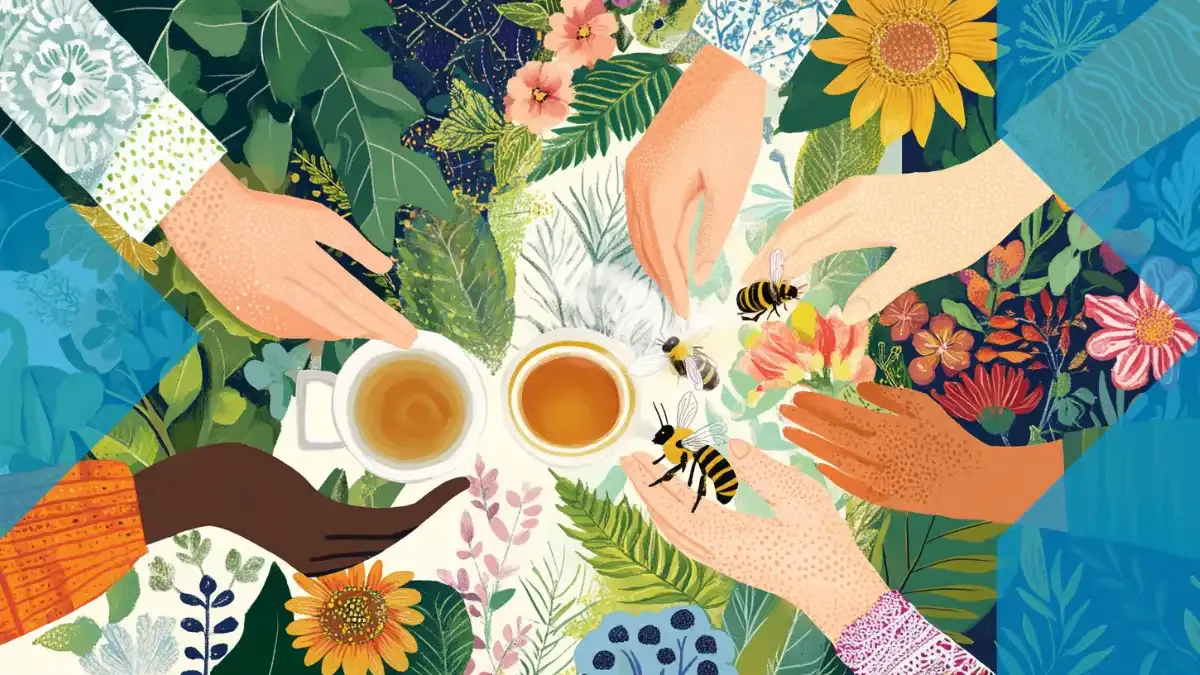
Every May, a series of global observances invites us to look more closely at the habits, landscapes, and relationships that shape daily life. World Bee Day on May 20, International Tea Day and the World Day for Cultural Diversity for Dialogue and Development on May 21, and the International Day for Biological Diversity on May 22 may seem like separate dates on the calendar. Yet together, they tell one connected story about culture and biodiversity, the livelihoods behind everyday rituals, the natural systems that support food and health, and the small acts of care that help families and communities stay close.
At first, tea, bees, cultural diversity, and biodiversity may not appear to belong in the same conversation. Tea feels familiar and intimate. Bees feel ecological and agricultural. Cultural diversity speaks to identity, language, heritage, and dialogue. Biodiversity points to forests, flowers, rivers, crops, pollinators, and living systems. But when we look deeper, the connection becomes clear: people do not live apart from nature, and nature does not survive well when local knowledge, community practices, and everyday responsibility are ignored.
This is why May offers such a meaningful opportunity for reflection. A cup of tea can carry family memory, hospitality, rural labor, and agricultural tradition. A bee can remind us that even the smallest creatures play a role in food systems and local economies. A cultural celebration can preserve knowledge across generations. A garden, a local market, or a seasonal meal can be a small but practical contribution to healthier ecosystems.
At sendvalu, we understand connection as something built through daily gestures. It can be a message, a call, a money transfer, a mobile top-up, a gift card, or any thoughtful action that helps someone feel remembered and supported. In the same spirit, the May observances remind us that care is not only emotional. It is also practical, cultural, ecological, and shared.
The calendar itself creates a natural bridge. World Bee Day, International Tea Day, Cultural Diversity Day, and Biodiversity Day arrive within three days of each other. This closeness matters because each observance highlights one part of a larger system.
World Bee Day focuses attention on bees and other pollinators, whose work supports food crops, wild plants, and biodiversity. International Tea Day celebrates one of the world’s most consumed beverages and recognizes the people, landscapes, and cultures behind tea production. The World Day for Cultural Diversity for Dialogue and Development reminds us that culture is not only about art, food, or celebration, but also about peace, participation, sustainable development, and mutual respect. The International Day for Biological Diversity brings the message back to nature, asking people, communities, institutions, and governments to act locally for a healthier planet.
Together, these days show that culture and biodiversity are not abstract concepts. They are part of ordinary life. They appear in what people drink, grow, cook, pass down, protect, and share. They are visible in family recipes, traditional farming systems, beekeeping knowledge, seasonal markets, community gardens, and the way people teach children to respect the world around them.
This broader perspective is especially useful for a global audience. Many families today live across countries and continents. Traditions travel with them. So do worries, responsibilities, and everyday forms of support. People abroad may be far from home, but they often remain deeply connected to the landscapes, foods, customs, and family routines that shaped them.
That is why an article about May can be much more than a list of awareness days. It can be a reminder that connection is lived through culture, supported by nature, and strengthened by care.
Tea is one of the most familiar ways people create moments of pause, hospitality, and connection. In many cultures, offering tea is a gesture of welcome. It can mark the start of a conversation, the end of a meal, a family gathering, a religious or seasonal tradition, or a quiet moment of reflection.
International Tea Day, observed on May 21, recognizes this cultural importance while also drawing attention to tea as a source of income, employment, and rural development. Tea is not simply a drink that appears in kitchens, cafés, and homes. Behind every cup are farmers, workers, processors, transporters, traders, and families whose livelihoods may depend on the tea sector.
Recent global discussions around tea increasingly emphasize sustainability, smallholder farmers, women’s participation, climate resilience, and fairer value chains. This matters because tea is often grown in rural regions where agriculture is central to household income. In many producing countries, tea can support employment and food security, especially when small producers have access to better practices, markets, and support systems.
The idea of sustainable tea is therefore not only about environmental responsibility. It is also about people. It includes soil health, water use, biodiversity, labor conditions, climate adaptation, and the future of communities that have cultivated tea across generations.
Tea also carries a strong cultural dimension. From Chinese and Japanese tea traditions to South Asian chai, Moroccan mint tea, East African tea farming, British tea habits, Turkish tea culture, and many other practices, tea has become a global language of hospitality. It adapts to local tastes and customs, yet it often serves the same human purpose: bringing people together.
This is where culture and biodiversity begin to overlap. Traditional tea landscapes can be more than agricultural zones. Some tea-growing systems are connected with forest margins, agroforestry, mountain ecosystems, and local knowledge about plants, water, shade, and soil. When these systems are managed with care, they can support both livelihoods and ecological balance. When they are managed poorly, they can contribute to land pressure, habitat loss, or soil degradation.
A cup of tea, then, is never just a cup of tea. It can be a sign of family warmth, cultural identity, rural work, and environmental responsibility. It reminds us that everyday comfort often depends on people and places we may never see.
If tea helps us enter the story through ritual, bees help us understand the invisible work behind food and biodiversity. World Bee Day, observed on May 20, highlights the essential role of bees and other pollinators in ecosystems, agriculture, and human wellbeing.
Pollinators help many flowering plants reproduce. They also support a wide range of crops that contribute to food diversity and nutrition. Bees, butterflies, birds, bats, and other pollinating species are part of the living networks that make fruits, seeds, vegetables, and many natural habitats possible.
This is why bees are more than a symbol of nature. They are part of food security, rural livelihoods, biodiversity conservation, and ecosystem health. When pollinators decline, the effects can reach far beyond honey production. They can affect crop yields, wild plant reproduction, nutrition, and the resilience of landscapes.
The causes of pollinator decline are complex. Habitat loss, pesticide exposure, climate change, pests, diseases, monoculture farming, and the fragmentation of landscapes all play a role. These pressures can reduce the availability of food, shelter, and nesting areas for pollinators. They also remind us that small creatures depend on large systems, and large systems can be affected by small everyday choices.
Beekeeping adds another human layer to the story. In many rural communities, beekeeping can provide income with relatively limited resources. It can support households, encourage local enterprise, and preserve traditional knowledge. In some places, women and young people are increasingly involved in beekeeping projects that connect environmental care with economic opportunity.
This is one reason World Bee Day fits naturally into a wider article about culture and biodiversity. Bees are ecological actors, but they are also part of culture, agriculture, livelihoods, and family resilience. Honey, wax, traditional remedies, local foods, seasonal practices, and beekeeping knowledge all show how closely human communities have lived with bees across time.
Practical action does not always need to be complex. Pollinator-friendly practices can begin close to home. Planting native flowers, reducing harmful chemicals, supporting local honey producers, leaving small habitats for insects, protecting hedgerows, and choosing more sustainable food options can all help create friendlier spaces for pollinators.
These actions may feel small, but they matter because pollinator protection is cumulative. A garden, balcony, schoolyard, farm edge, or community green space can become part of a wider network of support for bees and other pollinators.
The World Day for Cultural Diversity for Dialogue and Development, also observed on May 21, adds a deeply human dimension to the May story. Cultural diversity is often understood through language, music, clothing, food, festivals, and heritage. But it also includes knowledge systems, values, social practices, and ways of living with the natural world.
Culture shapes how people grow food, prepare meals, welcome guests, care for elders, celebrate seasons, mark transitions, and teach children. It shapes what families consider meaningful, what communities protect, and how people understand their responsibility to one another.
This is why cultural diversity should not be treated as decoration. It is part of sustainable development. It helps societies build dialogue, creativity, resilience, and belonging. It also helps preserve knowledge that may be essential for protecting biodiversity.
Indigenous Peoples and local communities often hold generations of knowledge about plants, animals, water systems, soils, seeds, forests, and seasonal changes. This knowledge is not separate from culture. It is carried through language, stories, rituals, farming methods, food traditions, and daily observation. When these practices are weakened, the loss is not only cultural. It can also affect biodiversity stewardship.
The connection between culture and biodiversity becomes especially clear in food traditions. A family dish may preserve knowledge about local crops. A tea ritual may carry agricultural history. A beekeeping practice may reflect long experience with flowering seasons and landscapes. A local market may protect regional varieties that large supply chains often overlook.
For families living abroad, cultural diversity has another meaning. It becomes a bridge between places. A person may live in Spain, Germany, France, Canada, or the United States while still preparing food from home, celebrating traditional dates, speaking a family language, or supporting relatives in another country. These practices keep identity alive across distance.
At sendvalu, we see this kind of connection every day in the ways people support loved ones across countries. A practical gesture can carry cultural meaning when it helps a family celebrate, prepare a meal, stay connected, or continue a tradition from afar.
Biodiversity is often imagined as something far away: rainforests, coral reefs, mountains, wetlands, or protected reserves. These places are essential, but biodiversity also lives much closer to us. It is present in urban trees, gardens, soil organisms, birds, local seeds, insects, rivers, farms, and seasonal foods.
The International Day for Biological Diversity, observed on May 22, helps bring this reality into focus. Its recent themes have emphasized action, participation, and the importance of local engagement. This matters because biodiversity loss is a global challenge, but many solutions begin in local contexts.
A household may not be able to change global systems alone, but it can still take meaningful steps. Choosing seasonal produce, reducing food waste, composting where possible, planting pollinator-friendly flowers, supporting local farmers, protecting green spaces, avoiding unnecessary chemical use, and learning from elders or community knowledge are all practical forms of participation.
These actions also create opportunities for family care. A grandparent teaching a child how to grow herbs is sharing more than a skill. A family choosing local foods is connecting diet with place. A community protecting trees is caring for shade, birds, soil, and future generations. A person abroad supporting relatives during a seasonal celebration is helping keep family life stable, even from a distance.
This is where Biodiversity Day becomes more than an environmental observance. It becomes a reminder that care for nature and care for people often overlap. Healthy ecosystems support food, water, livelihoods, medicine, climate resilience, and wellbeing. When biodiversity is weakened, families and communities can feel the effects through higher vulnerability, less secure food systems, and fewer natural resources.
The idea of culture and biodiversity helps us understand why local action matters. People are more likely to protect what they know, value, and feel connected to. Cultural traditions can turn environmental responsibility into a daily practice. They can make sustainability feel less like an obligation and more like a continuation of care.
One of the most powerful ways to understand these May observances is to follow the journey from landscapes to homes. Tea fields, flowering plants, bee habitats, family kitchens, local markets, and cultural celebrations may seem separate, but they are connected through work, memory, and care.
A tea-growing family may depend on healthy soil, stable weather, fair income, and strong community networks. A beekeeper may depend on flowering plants, clean habitats, and local demand for honey or bee products. A family preparing traditional food may depend on ingredients that come from biodiverse landscapes. A person living abroad may depend on digital services, reliable communication, and trusted ways to support relatives back home.
This is why sustainability should not be discussed only as a technical topic. It is also emotional and relational. People protect nature not only because it is necessary, but because it is tied to the people and places they love.
At sendvalu, we often speak about support as something that travels. In this context, support can mean helping a loved one cover essentials, sending a thoughtful gift, topping up a mobile phone, or simply making sure a family member can stay connected. These everyday actions may not look environmental at first, but they belong to the same wider idea of care: noticing what matters and responding in a practical way.
The same is true for local sustainability. Planting flowers for pollinators, choosing responsibly produced tea, reducing waste, or preserving a family recipe are not dramatic actions. They are modest and repeatable. But repeated across households and communities, they can help shape healthier habits.
That is the strength of everyday connection. It does not depend on one grand gesture. It grows through consistency.
Sustainability can sometimes be discussed in a way that focuses mostly on nature and forgets people. The May observances remind us that this approach is incomplete. Tea, bees, cultural diversity, and biodiversity are all connected to livelihoods.
Tea supports millions of people across the world, especially smallholder farmers and rural workers. Beekeeping can strengthen household income in rural areas. Cultural and creative activities contribute to employment, identity, and community participation. Biodiverse landscapes support farming, food systems, health, and local economies.
When we talk about sustainable livelihoods, we are talking about the ability of people to support themselves and their families without destroying the systems that future generations will need. This includes fairer opportunities, better resource management, climate resilience, and respect for local knowledge.
The phrase may sound technical, but the reality is simple. A livelihood is the work that helps a family live. When that work depends on soil, rain, pollinators, forests, seeds, or cultural knowledge, sustainability becomes deeply personal.
This is especially important in communities where migration is part of family life. Many people move abroad to work, study, or build new opportunities while continuing to support relatives at home. Their financial and emotional contributions often help families manage daily expenses, education, health needs, celebrations, and unexpected challenges.
For us at sendvalu, this is one of the reasons connection matters so much. Support across distance can help families remain resilient while communities adapt to economic, environmental, and social change.
The lesson of May is not that everyone must become an expert in biodiversity, tea production, beekeeping, or cultural policy. The lesson is that everyday practices matter. They create habits of attention.
A family can choose to learn where its tea comes from. A school can plant flowers that support pollinators. A community group can organize a local biodiversity activity. A parent can teach a child a traditional recipe. A person abroad can call home during a meaningful cultural date. A neighborhood can protect a shared green space. A household can reduce waste or buy seasonal foods from local producers.
These gestures are small, but they are not empty. They help people understand that connection is built through what we do repeatedly.
Pollinator-friendly practices are a good example. Planting native flowers, avoiding pesticides when possible, leaving small wild areas, or supporting local beekeepers may not feel revolutionary. Yet these actions create real conditions for pollinators to survive. They also help people notice the living world around them.
The same is true of cultural practices. Sharing tea with a guest, preparing a traditional dish, speaking a family language, telling a story about a homeland, or celebrating a date with loved ones abroad can strengthen identity and belonging. These acts help culture remain alive rather than frozen in memory.
This is the heart of culture and biodiversity: both need continuity. Both depend on transmission. Both survive when people value them enough to practice, protect, and share them.
May’s observances remind us that care is broader than we often imagine. Care can be ecological when we protect pollinators and reduce harm to living systems. It can be cultural, when we respect traditions and learn from different communities. It can be economic when we recognize the workers, farmers, and families behind everyday products. It can be emotional when we stay present for loved ones across distance.
Tea teaches us to slow down and recognize the people behind a daily ritual. Bees teach us that small lives can support vast systems. Cultural diversity teaches us that no single way of living contains all wisdom. Biodiversity teaches us that life depends on relationships.
At sendvalu, we believe practical support is one way to keep those relationships strong. When families are separated by distance, everyday care often needs reliable tools, thoughtful timing, and human understanding. That is why we connect our services with the real needs of people who continue to care for loved ones across countries.
The May calendar brings that idea into a wider frame. It shows that connection is not only about people speaking to people. It is also about people relating to land, food, memory, work, and future generations.
The story of May is ultimately a hopeful one. It does not deny the challenges facing pollinators, tea-growing communities, cultural heritage, or biodiversity. But it also does not leave us helpless. Instead, it points toward local action, everyday responsibility, and the power of shared habits.
A cup of tea can begin a conversation. A bee can remind us of hidden dependence. A cultural practice can keep memory alive. A garden can become a small refuge. A family gesture can carry love across distance.
These are not separate lessons. They are part of the same message: the world is held together through relationships. Some are visible. Others are quiet. Some are cultural. Others are ecological. Many are both.
That is why culture and biodiversity offer such a meaningful way to understand everyday connections. They show us that what we inherit, what we protect, and what we pass on are deeply linked. They remind us that sustainability is not only a global goal. It is also a family habit, a community practice, and a daily choice.
In May, as the world marks International Tea Day, World Bee Day, Cultural Diversity Day, and Biodiversity Day, the invitation is simple: look closer at the ordinary things that connect us. A drink, a flower, a recipe, a story, a transfer, a call, a garden, a shared meal. Each one can become part of a larger culture of care.
And when care is practiced consistently, it becomes more than a feeling. It becomes a way to support people, protect life, and keep connections alive.
Sources:
Food and Agriculture Organization of the United Nations – International Tea Day
Food and Agriculture Organization of the United Nations – Tea: Markets and Trade
Food and Agriculture Organization of the United Nations – A Cup of Tea… or Cha?
Food and Agriculture Organization of the United Nations – On International Tea Day, FAO Spotlights the Role of Women in the Sector
Food and Agriculture Organization of the United Nations – World Bee Day 2026
Food and Agriculture Organization of the United Nations – World Bee Day 2025: Protect the Pollinators Who Protect Us
Food and Agriculture Organization of the United Nations – Global Action on Pollination Services for Sustainable Agriculture
United Nations Educational, Scientific and Cultural Organization – World Day for Cultural Diversity for Dialogue and Development
United Nations Educational, Scientific and Cultural Organization – Culture’s Contribution to Sustainable Development
United Nations Educational, Scientific and Cultural Organization – Advancing Indigenous and Local Knowledge for Biodiversity Policy and Action
United Nations Educational, Scientific and Cultural Organization – People and Nature in UNESCO-Designated Sites: Global and local contributions
Convention on Biological Diversity – International Day for Biological Diversity 2026
Convention on Biological Diversity – Theme of the International Day for Biological Diversity 2026
Convention on Biological Diversity – How to Be Part of the Plan
World Health Organization – Biodiversity Fact Sheet
International Institute for Sustainable Development – Global Market Report: Tea Prices and Sustainability
Customer reviews
Why do they trust us? Read what our customers say about sendvalu.


Rated Best Over 5174 Reviews
