Share support and care effortlessly around the world
You are back online
Share support and care effortlessly around the world
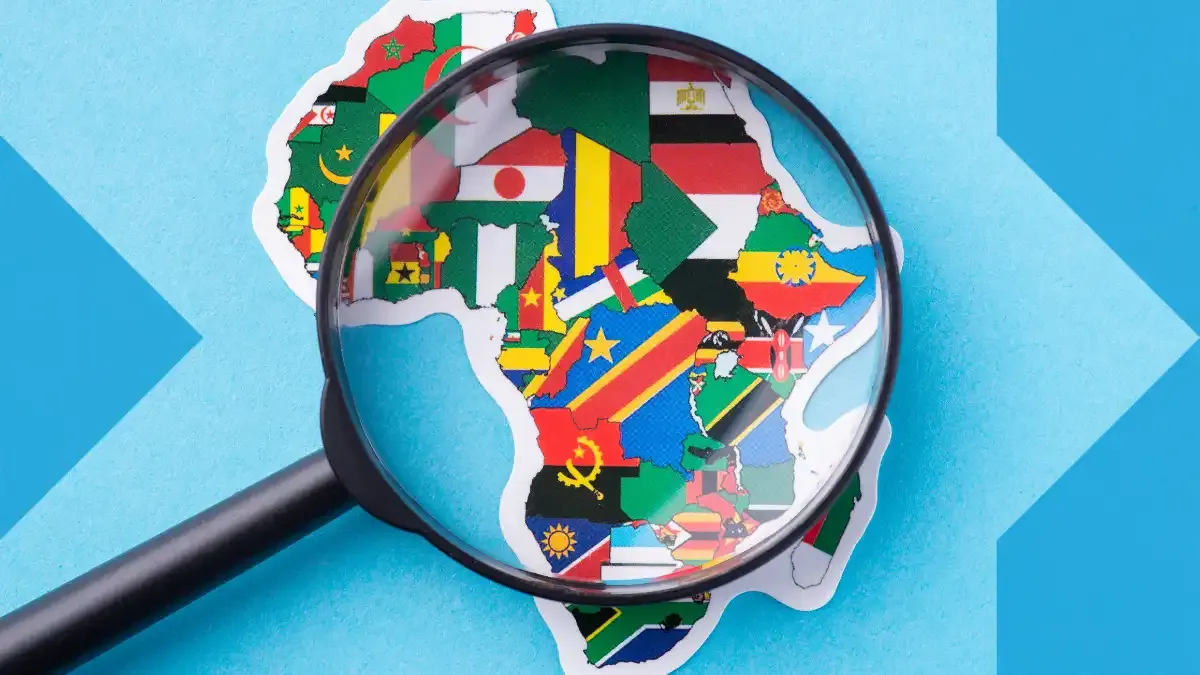
Every year on May 25, Africa Day invites people across the continent and around the world to celebrate unity, identity, resilience, and shared heritage. It marks the founding of the Organization of African Unity in 1963, which later became the African Union. In 2026, the day carries a special sense of continuity, as the African Union commemorates 63 years of unity, integration, and development. Yet beyond official ceremonies, speeches, and cultural events, this date also belongs to families. It belongs to parents teaching children the meaning of a flag, grandparents telling stories in a familiar language, communities gathering around food and music, and relatives abroad finding practical ways to remain present despite the distance.
For many African families, heritage is not preserved only in museums, schools, or public celebrations. It is kept alive in daily routines. It appears in the names chosen for children, the meals prepared on weekends, the songs played at home, the languages spoken during phone calls, and the values passed from one generation to another. These everyday gestures are especially meaningful for the African diaspora, whose members often balance life in a new country with a deep emotional connection to home.
That connection is not only cultural. It is also practical. Across borders, families continue to support one another through advice, encouragement, remittances, mobile top-ups, gifts, and regular check-ins. In many households, love is expressed through both memory and responsibility. A person living abroad may teach their child about African heritage while also helping a parent pay for medicine, contributing to a sibling’s education, or sending support during a difficult month. In that sense, family care becomes one of the most powerful ways heritages continue to live.
Africa Day is rooted in a historic moment of unity. On May 25, 1963, leaders from newly independent African countries gathered in Addis Ababa, Ethiopia, to create the Organization of African Unity. They aimed to strengthen cooperation, support liberation movements, promote solidarity, and affirm Africa’s voice in global affairs. More than six decades later, the African Union continues that broader mission through continental cooperation, regional integration, and development goals.
The meaning of the day has grown over time. It is no longer only a political anniversary. It is also a cultural and social moment that allows people to reflect on Africa’s diversity, its global influence, and its future. Across the continent and in diaspora communities, events may include music, dance, food festivals, storytelling, panel discussions, educational activities, exhibitions, and family gatherings. These celebrations show that identity is not static. It is renewed every time people come together to remember where they come from and imagine where they are going.
In recent years, the official framing of the date has also connected history with the future. The 2025 theme, “Revisiting Our History, Shaping Our Future,” encouraged reflection on memory, justice, and shared progress. In 2026, the focus on unity, integration, and development offers another opportunity to see the celebration as both a tribute and a commitment. It honors what has been achieved while recognizing that many families, communities, and countries are still working toward greater opportunity, dignity, and stability.
For a global audience, this matters because Africa is not only a place on a map. It is a source of culture, language, creativity, entrepreneurship, food traditions, spiritual life, music, literature, fashion, and family values that continue to shape communities worldwide. When people celebrate Africa Day, they are also celebrating the many ways Africa lives beyond its borders.
The African diaspora plays a central role in how the day is understood today. The African Union recognizes people of African origin living outside the continent as part of Africa’s wider community, and the diaspora is often described as Africa’s sixth region. This idea is important because it expands the meaning of belonging. It shows that African identity is not limited by geography. It can be carried through ancestry, memory, culture, family responsibility, and a willingness to contribute to Africa’s development.
Across Europe, the Americas, the Middle East, Asia, and Oceania, diaspora communities mark the occasion in many different ways. Some attend public festivals. Others organize cultural events, church or mosque gatherings, community dinners, school activities, business forums, or online conversations with relatives back home. In countries such as Ireland, recent public programmes have included family activities, food, crafts, storytelling, dance, children’s workshops, and discussions about diaspora contributions. These events show how celebration becomes a bridge between public culture and private family life.
For children growing up outside their parents’ or grandparents’ country of origin, days like this can be especially meaningful. They offer a visible reminder that their background is not something distant or abstract. It is something to learn, enjoy, and carry with confidence. A child who hears stories about Ghana, Nigeria, Kenya, Senegal, Ethiopia, Morocco, Angola, Uganda, or Côte d’Ivoire may begin to understand that heritage is made of many places, languages, histories, and customs. Africa is not one culture, one rhythm, one dish, or one story. It is plural, rich, and deeply diverse.
That diversity should always be approached with care. Talking about African culture as if it were one single tradition would miss the point. The continent is home to thousands of ethnic groups and languages, different faith traditions, rural and urban lifestyles, coastal and inland identities, and long histories of movement and exchange. The diaspora reflects that same variety. A family from Lagos may celebrate differently from a family from Dakar, Accra, Nairobi, Abidjan, Kampala, Rabat, or Kinshasa. Yet many share a common desire: to keep memory, pride, and connection alive.
For many families, the first place where cultural identity is built is the home. Long before children read history books or attend public events, they absorb heritage through everyday experience. They hear names pronounced correctly. They taste familiar ingredients. They watch how elders greet guests. They learn when to speak, when to listen, and how respect is shown. They hear family stories that connect them to places they may not yet have visited.
Language is one of the strongest examples. Even when a child grows up speaking the language of the country where the family now lives, hearing a parent or grandparent speak Yoruba, Amharic, Wolof, Swahili, Twi, Hausa, Somali, Arabic, Zulu, Igbo, Portuguese, French, English, or another African language can create a strong emotional connection. Some families make a deliberate effort to teach greetings, prayers, songs, proverbs, or simple phrases. Others preserve language through phone calls, music, films, or conversations with relatives back home.
Food is another form of memory. A shared meal can carry history without needing to explain it. Jollof rice, injera, couscous, fufu, tagine, suya, waakye, matoke, egusi soup, thieboudienne, bunny chow, or countless other dishes can become part of family identity. Recipes may change depending on where ingredients are available, but the emotional meaning remains. Cooking becomes a way to remember, adapt, and belong.
Storytelling also matters. Many African families preserve values through stories of migration, work, sacrifice, education, faith, humor, and resilience. A parent might tell a child about growing up in a village, a city neighborhood, or a coastal town. A grandparent may explain the meaning of a festival, a surname, a traditional garment, or a family custom. These stories do more than entertain. They create continuity.
Research on diaspora identity shows that cultural belonging can support self-esteem, confidence, and a stronger sense of place. This is especially important for younger generations who may feel they are navigating more than one identity at the same time. When families create space for heritage at home, they help children understand that they do not need to choose between where they live and where their family comes from. They can belong to both.
African family traditions are often built around connection. They may involve respect for elders, responsibility toward relatives, collective decision-making, hospitality, faith practices, rites of passage, naming ceremonies, weddings, funerals, seasonal festivals, and shared meals. These traditions vary widely by country, region, religion, ethnic group, and family history, but they often express a similar principle: family is not only a private unit. It is a network of care.
In diaspora life, these traditions often adapt. A large family gathering that would have happened in one town may become a video call across several countries. A religious celebration may be observed in a smaller apartment rather than a large extended household. A traditional outfit may be worn at a community event abroad. A child’s naming ceremony may combine local customs with ancestral practices. A family recipe may include substitute ingredients because the original ones are difficult to find.
These adaptations do not weaken heritage. In many cases, they prove their strength. Traditions survive because people make them work in new contexts. They become flexible enough to travel, yet meaningful enough to remain recognizable.
This is one reason Africa Day celebrations are so valuable. They give families a moment to bring these private practices into public view. A child who sees music, food, flags, art, fashion, and languages represented in a community space may feel pride in something that previously existed only at home. A parent who attends a celebration abroad may feel less alone. A grandparent watching from another country may feel that family identity is still being carried forward.
Public celebration and private memory support each other. One gives visibility. The other gives depth.
For African families separated by borders, support often becomes part of the emotional language of love. It can take many forms: calling regularly, helping with school fees, contributing to healthcare costs, sending money for a family event, helping a younger relative start a small business, sending mobile credit, or remembering an important date with a gift. These actions may look practical, but they are deeply personal.
This is where family remittances become part of the story. Remittances are sometimes discussed only in economic terms, but for families, they are often tied to care, duty, gratitude, and hope. A transfer may help cover food, rent, school materials, transportation, medicine, or household repairs. It may also support long-term goals such as education, savings, farming, entrepreneurship, or climate resilience.
Recent global data shows how important these flows remain. In 2024, remittances to low and middle-income countries were estimated to reach hundreds of billions of dollars globally, with Sub-Saharan Africa receiving tens of billions. Other remittance-focused research and programmes estimate that flows to and within Africa exceeded $100 billion in 2024, benefiting at least 200 million family members of African migrants. These numbers are significant, but behind them are ordinary people making regular decisions about how to help.
A son in Europe may send money to help his mother with medicine. A daughter in North America may support a sibling’s university costs. A worker in the Gulf may contribute to a family home. A relative in another African country may send funds during a wedding, funeral, harvest season, or school term. In many cases, these actions are not occasional. They are part of a long-term relationship of responsibility.
At the same time, sending support can be emotionally complex. Migrants and diaspora members often manage their own expenses while helping relatives elsewhere. They may feel pride, pressure, love, and responsibility all at once. Recognizing this complexity is important. Support should not be romanticized as effortless. It is meaningful precisely because it often requires planning, sacrifice, and trust.
At sendvalu, we understand that practical support is rarely “just a transaction.” It can be a way to say, “I remember,” “I am here,” and “you are not alone,” even when families live in different countries.
The way families support one another has changed. In the past, sending money or gifts across borders could be slow, expensive, and uncertain. Today, digital financial services, mobile money, online transfers, mobile top-ups, and digital gift cards have made it easier for many people to help relatives quickly and more conveniently. This matters because family needs do not always wait.
A school payment may be urgent. A phone may need credit before an important call. A parent may need help with medicine. A family may be preparing for a celebration and need support on time. In these moments, speed and reliability are not technical details. They affect real relationships.
Current remittance cost data shows why digital services are so important. Sub-Saharan Africa remains one of the most expensive regions in the world for sending remittances, and costs are still above the global target set under the Sustainable Development Goals. Digital channels can help reduce friction by improving convenience, transparency, and access. While costs and availability vary by corridor and provider, the broader trend is clear: families benefit when support becomes easier, faster, and more reliable.
For diaspora communities, digital tools also help maintain emotional closeness. A mobile top-up can allow a relative to stay connected during a busy week. A gift card can help someone choose what they need. A money transfer can support essential expenses or a family plan. These tools cannot replace presence, but they can make care more immediate.
At sendvalu, we see this connection every day. We help people send money, mobile top-ups, and digital gift cards because support across distance should feel practical, personal, and accessible.
One of the most powerful parts of diaspora life is the way pride and responsibility move together. Cultural pride helps families remember who they are. Practical responsibility helps them care for one another. Together, they create continuity.
A young person abroad may learn about African heritage through music, fashion, stories, food, or family celebrations. Later, that same person may become the one who supports relatives, organizes community events, teaches children a family language, or travels back to reconnect with ancestral places. Heritage is not only inherited. It is also practiced.
This is why family responsibility should be understood as part of cultural identity. In many African contexts, helping relatives is not seen as separate from who a person is. It reflects values of reciprocity, respect, community, and shared dignity. Even when families disagree about expectations or face financial pressures, the underlying idea remains powerful: people are connected.
At the same time, modern African families are diverse. Not everyone experiences family responsibility in the same way. Some people send support regularly. Others contribute occasionally. Some focus on emotional support, mentorship, or cultural teaching. Some are building new lives while healing from difficult histories. A respectful article about Africa Day must leave room for all of these experiences.
The common thread is connection. Whether through a Sunday call, a shared recipe, a transfer, a voice note, a child learning a greeting, or a family gathering abroad, people continue to build bridges between past and future.
Families are central, but community also matters. Diaspora associations, cultural groups, faith communities, student organizations, local councils, artists, business networks, and social media communities all help keep identity visible. They create spaces where people can gather, teach, celebrate, and support one another.
Community events around Africa Day often show this clearly. A public celebration may include children’s activities, traditional clothing, dance performances, spoken word, entrepreneurship showcases, health outreach, or discussions about Africa’s role in the world. These events are not only festive. They are educational. They help people understand Africa as a living, changing, and globally connected reality.
For younger generations, community spaces can also create belonging. A child who may be one of the few African heritage students in a school can suddenly see many families with similar roots gathered in one place. A young adult who feels caught between cultures may find language, music, humor, and shared experiences that feel familiar. A newly arrived migrant may find information, friendship, and practical advice.
The digital community also plays a growing role. Social media platforms allow people to share recipes, music, history lessons, language tips, fashion, family stories, and news from home. Video calls connect relatives across continents. Messaging apps allow families to remain present in daily life. Technology does not remove distance, but it makes distance easier to manage.
At sendvalu, we believe that staying connected is part of everyday care. Whether families are celebrating cultural pride or handling practical needs, the ability to support loved ones quickly can help keep relationships strong.
Any meaningful reflection on Africa Day must avoid reducing Africa to a single narrative. The continent is home to 54 recognized countries, extraordinary linguistic diversity, ancient and modern cities, rural communities, global entrepreneurs, artists, farmers, scientists, athletes, teachers, innovators, and families with different histories and dreams. It includes conflict and creativity, challenges and achievement, tradition and transformation.
The diaspora is equally diverse. Some families have migrated recently for work, education, safety, or opportunity. Others are part of older Afrodescendant communities shaped by centuries of history in the Caribbean, the Americas, Europe, and elsewhere. Some people maintain daily contact with relatives on the continent. Others are rediscovering ancestral connections after generations of separation. All of these experiences form part of the wider global African story.
This is why cultural celebration should be specific whenever possible. Instead of speaking only about “African food,” we can name dishes and regions. Instead of speaking only about “African music,” we can recognize Afrobeats, highlife, amapiano, mbalax, soukous, taarab, gnawa, gospel, hip-hop, traditional drumming, and many other forms. Instead of speaking only about “African clothing,” we can acknowledge kente, boubou, dashiki, habesha kemis, shweshwe, Ankara prints, kaftans, and countless local styles.
Specificity shows respect. It reminds readers that heritage is not a decorative theme. It is lived history.
The future of African family connections will likely be shaped by both culture and technology. Young people in the diaspora are using digital tools to learn languages, discover family histories, start businesses, send support, follow news from home, and participate in cultural movements. Families are finding new ways to celebrate together, even when they cannot be in the same room.
At the same time, practical support will remain essential. Education costs, healthcare needs, housing expenses, emergencies, celebrations, and business ideas will continue to connect families financially and emotionally. The challenge is to make this support more affordable, transparent, and accessible, especially in corridors where costs remain high.
This is where service providers have a responsibility. Families need tools that respect the importance of what they are sending. A transfer is not only an amount. A top-up is not only mobile credit. A gift card is not only a digital code. Each one can represent time, work, memory, and care.
At sendvalu, we aim to support these everyday acts of connection by helping people send money, mobile top-ups, and digital gift cards to loved ones in different parts of the world. Our role is practical, but the meaning belongs to the families who use these services to stay close.
Africa Day is celebrated on May 25, but its meaning does not end there. The values it highlights, unity, dignity, heritage, responsibility, and hope, are lived throughout the year by families across the continent and the diaspora. They are lived when a parent teaches a child a family language, when relatives gather around familiar food, when a community organizes a cultural event, when a young person learns the history behind their name, and when someone abroad sends support home with care.
For families separated by distance, connection is built through both emotion and action. Heritage keeps memory alive. Practical support keeps relationships steady. Together, they show that belonging is not limited by borders.
The strongest message of Africa Day may be this: identity is something people carry, share, and renew. It lives in celebration, but also in responsibility. It lives in music and stories, but also in school fees, phone calls, groceries, medicine, and gifts. It lives in the pride of knowing where we come from and in the care we continue to offer one another.
For African families around the world, keeping heritage alive is not only about remembering the past. It is about building a future where culture, family, and support continue to travel together.
Sources:
African Union – Commemoration of Africa Day, 25 May 2026
African Union – Statement of the AUC Chairperson on Africa Day 2026
African Union – Africa Day 2025
African Union – Diaspora Division
UNESCO – World Day for African and Afrodescendant Culture
UNESCO – Africa Week 2025
World Bank – Remittance Prices Worldwide, Q3 2025
IFAD – 15 Reasons Remittances Matter
IFAD – Remittances and Climate Resilience in Sub-Saharan Africa
FFRemittances – Diaspora RemitInvest
Ireland Irish Aid – Africa Day 2026 Programme
UNDP – Africa Day 2025
MDPI – Cultural Identity and African Heritage Youth
Edorium Journal of Psychology – African Ethnic Identity in Diaspora Settings
Customer reviews
Why do they trust us? Read what our customers say about sendvalu.


Rated Best Over 5174 Reviews
